
Rising Specialty Costs: What Plan Sponsors Can Do
From groceries to home insurance to plane tickets, it seems like costs continue to rise in all areas of our lives. But there are few areas where those rising costs are more evident than in health care. Overall, health spending is almost $4.9 trillion and projected to increase 6% per year over the next decade.1 But if you only look at specialty medication, that rate more than doubles to an estimated 13% annual increase for the next three years. It’s an issue many plan sponsors are trying to solve with few viable solutions.
What’s Sending Specialty Drug Prices Soaring?
Let’s start with the basics: specialty medications are high-cost, complex and require special distribution, all of which add up to even higher prices for plan sponsors. The median cost of a new specialty drug in 2023 was $300,000 annually.2
While specialty medications accounted for less than 2% of utilization, they drove a staggering 52% of total net spend in 2024.3
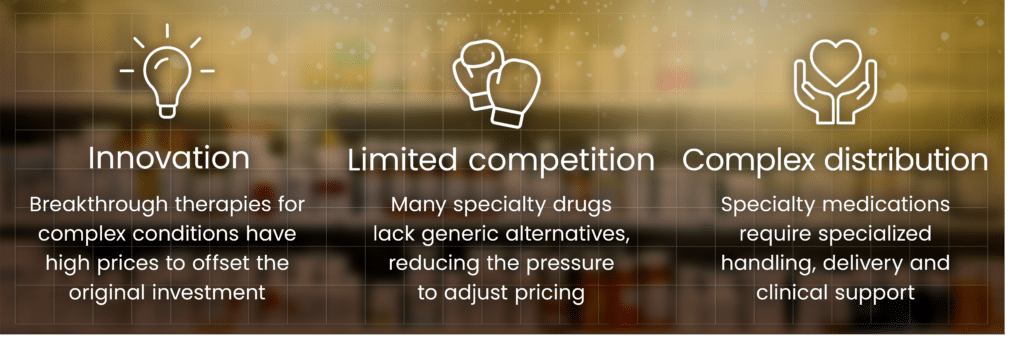
These rising costs have three key drivers:
- Innovation – Breakthrough therapies for complex conditions have high prices to offset the original investment
- Limited competition – Many specialty drugs lack generic alternatives, reducing the pressure to adjust pricing
- Complex distribution – Specialty medications require specialized handling, delivery and clinical support
And this disproportional cost is having a huge impact on plan sponsors, thanks to the unprecedented increase in pharmacy spend. The financial strains of escalating costs challenge budget predictability, both in the short- and long-term. And that affects member affordability through high out-of-pocket expenses, creating barriers to care and increasingly leading to member dissatisfaction.
But what if, instead of being reactive to these industry shifts, payers could be proactive?
Proactivity Starts with Transparency
Having the right pharmacy benefit manager (PBM) is key to gaining clarity on all these issues. Only by knowing where every dollar is going can plan sponsors understand where they can make a difference. A truly transparent PBM can provide plan sponsors with actionable strategies coming from multiple angles:
- Contract optimization – Ensures rebate structures and pricing terms are transparent and competitive (learn more about how rebates work in this blog post: The Role of Rebates in Pharmacy Benefits)
- Formulary management – Aligns coverage with clinical efficacy and cost effectiveness
- Utilization review – Monitors prescribing patterns to prevent unnecessary or duplicate therapies
The role of transparency in PBM partnerships really can’t be overstated, especially when it comes to contracting and reporting, which are essential to help plan sponsors gain control over their plans.
Looking Forward to The Future
Currently, specialty drug pipelines remain robust, which means we could see more cost pressures that would affect drug prices in the future. But the plan sponsors who embrace data-driven strategies now will be better positioned for what comes next. Plan to be proactive and keep a look out for our upcoming 2025 Drug Trend Report to see the latest specialty cost trends and more in-depth information about our industry.
Ready to Get Proactive?
Take a few minutes to get a quick education on the PBM industry, or take your first step toward clarity by reaching out to us at [email protected]. We can help you navigate specialty drug challenges with confidence.
References
1. American Medical Association, Trends in Healthcare Spending. www.ama-assn.org/about/ama-research/trends-health-care-spending. Updated April 17, 2025. Accessed April 23, 2025.
2. Krishnamurthy B, Parikh M, Drug Prices and Shortages Jeopardize Patient Access to Quality Hospital Care. Drug Prices and Shortages Jeopardize Patient Access to Quality Hospital Care. Updated May 22, 2024. Accessed October 8, 2025.
3. 2024 Navitus Drug Trend Report. www.navitus.com/drug-trend-reports/2024-snapshot/
Stay Informed and Connected
Receive expert insights, healthcare tips, and important updates on pharmacy benefits, drug recalls, and more—straight to your inbox.
CLARITY FOR ACTION
Gain Clarity: Navitus 10th Annual Drug Trend Report Ready to Download
Our 2025 report provides transparent, data-driven insight to help plans, plan sponsors and consultants navigate an increasingly complex prescription drug landscape.
Related blogs
Navigating Healthcare and Improving Outcomes

PBM 101: Demystifying the Complex World of Specialty Drugs
Unless you work in the pharmacy benefit management (PBM) industry, it’s easy to assume that a “specialty drug” is simply a more expensive prescription. In reality, specialty medications sit in a separate category, with different rules and far bigger consequences…


