
Where Every Dollar Goes in the Drug Supply Chain
When you put money into a vending machine, it’s a simple transaction. A dollar goes in and a soda comes out. But put that same dollar into the drug supply chain, and you’d be hard-pressed to find exactly what happens to it, how it’s being used or if you’re even getting your money’s worth.
That’s why understanding the flow of money in the pharmacy benefit management (PBM) industry is so important. By knowing where each dollar goes, you can better decide if your PBM is making decisions in your interest or its own.
Let’s break it down across three key segments: stakeholders, the flow of a dollar, and finally, how opacity and spread most often occur.
Who are the stakeholders?
Drug manufacturers develop medications and set the initial list price.
Group purchasing organizations (GPOs) negotiate lower prices for hospitals and pharmacies.
Wholesalers buy drugs from manufacturers and ship them to pharmacies and health systems.
Pharmacy services administrative organizations (PSAOs) help small pharmacies with paperwork and deals.
Pharmacy benefit managers (PBMs) work with payers to manage drug benefits, decide what’s covered and negotiate rebates.
Health plans/Payers decide what drugs are covered and how much members will pay.
Pharmacies dispense medications and ensure safe, timely access for patients.
Patients are the reason the entire drug supply chain exists.
Where does every dollar go?
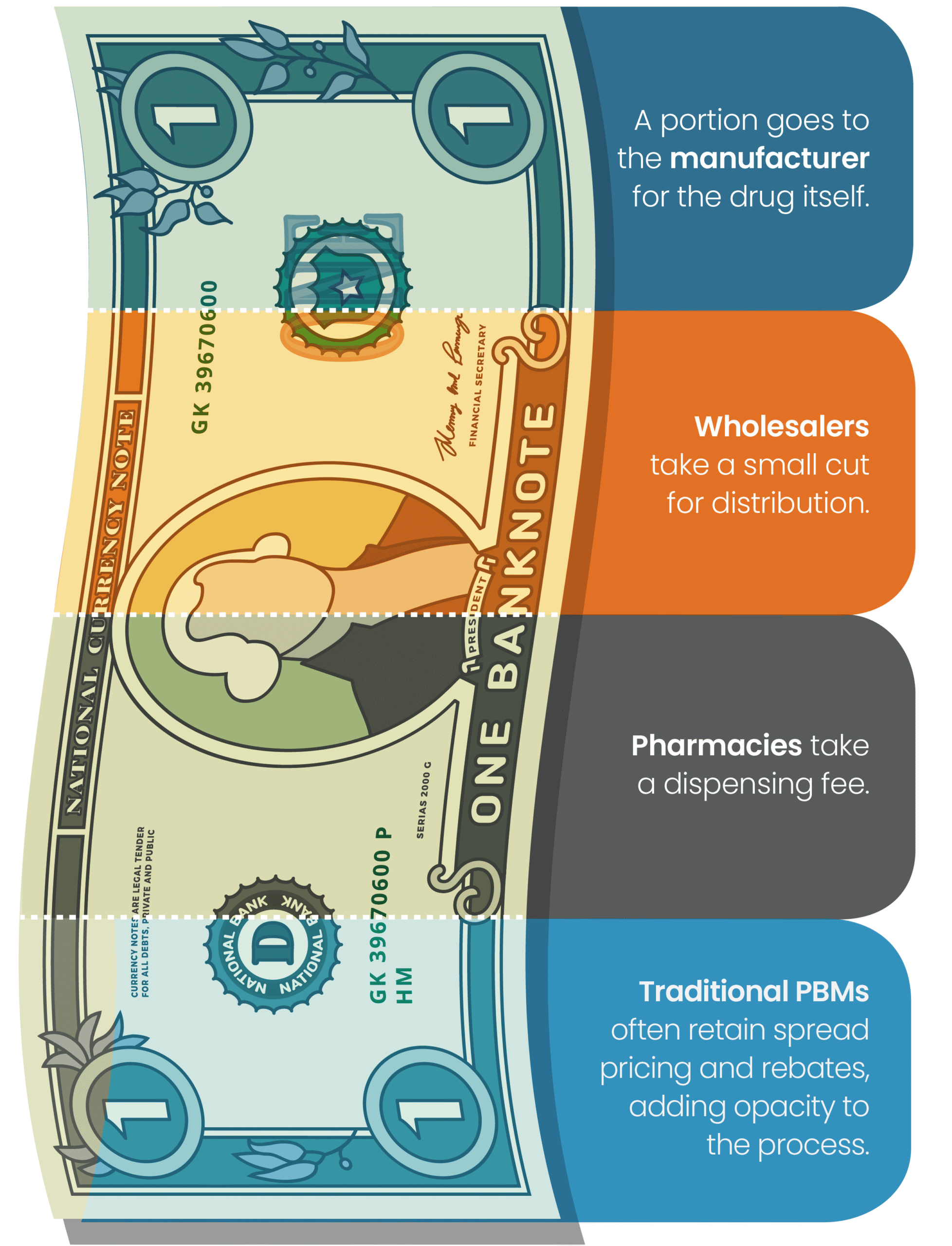
A portion goes to the manufacturer for the drug itself. Wholesalers take a small cut for distribution. Pharmacies take a dispensing fee. Traditional PBMs often retain spread pricing and rebates, adding opacity to the process and leading into the next section.
How do opaque practices like spread pricing work?
When a client has questions about the opaque PBM practices that cost them unknown amounts of money, it’s usually about things like spread pricing and rebate retention. Instead of being spelled out in contracts or bills, these traditional PBMs use hidden margins to inflate costs or hide the true value of rebates, making it harder to know where the money really goes.
Conversely, as a pass-through PBM, Navitus changes the game by bringing transparency to every dollar in four key ways:
- Ensuring all rebates are passed on to the client
- Offering complete visibility and disclosure of all manufacturer financial benefits
- Making all manufacturer agreements fully auditable by clients
- Going beyond the minimum savings guarantee: as we negotiate better terms, we deliver the full value to you to maximize your savings, not our margins
Learn more about how our transparent PBM model is designed, so you won’t have any questions about where your dollars go. Reach out to [email protected].
Stay Informed and Connected
Receive expert insights, healthcare tips, and important updates on pharmacy benefits, drug recalls, and more—straight to your inbox.
CLARITY FOR ACTION
Gain Clarity: Navitus 10th Annual Drug Trend Report Ready to Download
Our 2025 report provides transparent, data-driven insight to help plans, plan sponsors and consultants navigate an increasingly complex prescription drug landscape.
Related blogs
Navigating Healthcare and Improving Outcomes

Don’t Sign Here – The 7 Red Flags of PBM Contracts
Signing with a new pharmacy benefit manager (PBM) can be a daunting experience, with hundreds or thousands of plan members depending on that choice. And in this opaque industry, it is important to look beyond the initial conversations with a PBM when…


