
Specialty Spend: What This Year’s Results Reveal
Whether it’s with manufacturers, health plans or pharmacy benefit managers (PBMs), when it comes to the prescription drug conversations happening around the country, specialty medications are the big topic. These high-cost, complex medications often require special distribution, which means they dominate drug spend, accounting for less than 2% of utilization, but driving a staggering 52% of total net spend in 2024.1
But the real story lies in how specialty trends behave across the various pharmacy and medical benefits, and why integrated insight matters more than ever. This comes down to two major issues:
- The price of specialty medications can vary by thousands of dollars per fill on the exact same drugs, dependent on the PBM, coverage and other factors.
- Opaque business practices mean payers don’t always know how much those drugs cost or if they’re getting the full rebates they expected.
That’s why specialty remains a focal point for cost and strategy discussions. Without full clarity and integration, plan sponsors often only see part of the picture. And no one likes surprises when it comes to the bottom line.
The Trajectory of Specialty Trend
As we show in our 2025 Drug Trend Report:
Specialty drug trend rose 11.1% last year, driven almost entirely by a 13.1% increase in utilization but offset by a 1.9% decrease in unit cost. High-impact therapies such as Skyrizi®, Kisqali® and Dupixent® fueled spending.
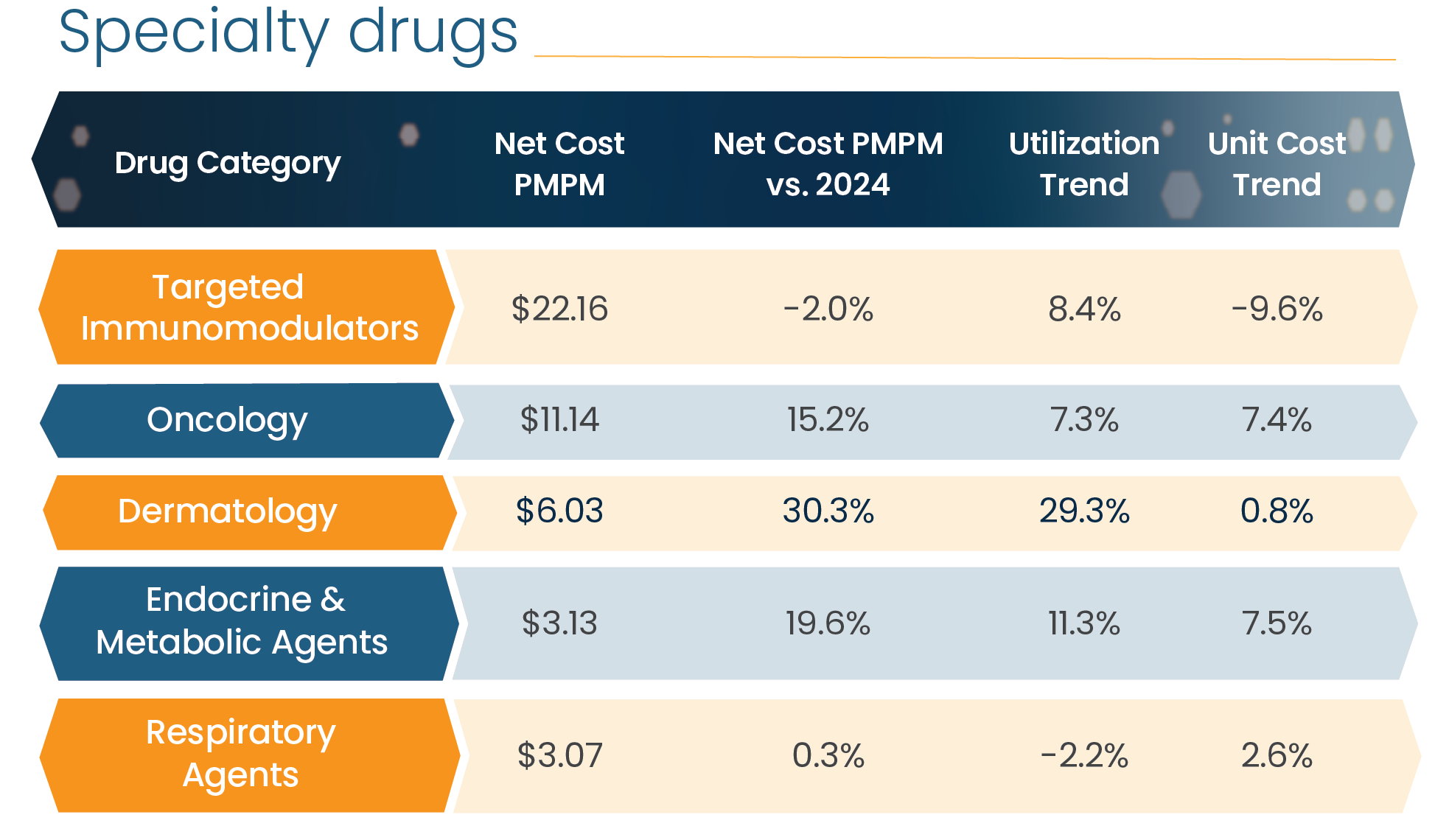
However, we did see unit cost decreases due to the launch of the biosimilar ustekinumab. But there’s no question that specialty drug cost remains the biggest source of plan risk and uncertainty. It demands decisive, evidence-based management.
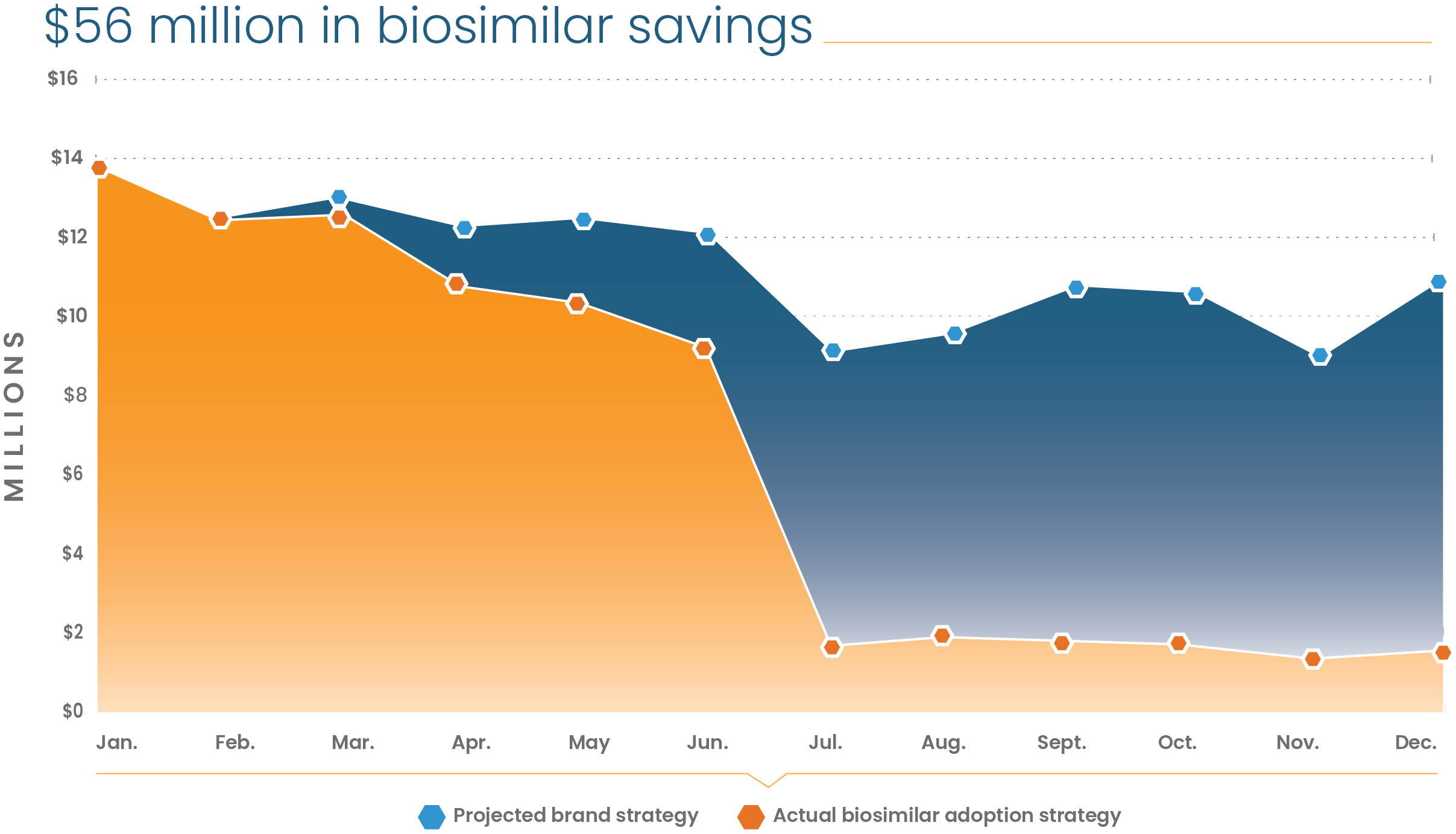
While biosimilar adoption is making a dent in the total costs, the continued influence of specialty on overall trend is enormous, with a small number of therapies driving disproportionate spend.
Specialty Trend Management: Medical vs Pharmacy
As discussed earlier, there are many opaque practices in place that can obscure exactly how much specialty medications cost. And a large part of that issue comes down to the type of specialty management in place. Specialty drugs administered on the medical side are often less visible, harder to isolate and historically managed separately. Conversely, pharmacy specialty typically has clearer reporting, but it’s still incomplete without medical insight.
Compounding the issues is the crossover that occurs as therapies move between benefits and the fragmentation of information that creates blind spots for both sides of specialty management, letting more problems slip through.
For this reason and many others, Navitus partners with Archimedes, which manages specialty medications by supporting alignment across both medical and pharmacy data. By integrating insights across both the medical and pharmacy benefits, Archimedes offers a complete picture, promoting better decision-making and more effective management. Simply put, when medical and pharmacy specialty insights come together, clarity and control improve exponentially.
Full visibility into medical specialty spend through Archimedes, combined with the valuable data from our Drug Trend Report, gives plan sponsors the tools they need to manage this growing category.
Your journey to holistically managing specialty medications starts today
Reach out to our team at [email protected]. And be sure to download our 10th annual Drug Trend Report for further specialty insights.
References
1. 2024 Navitus Drug Trend Report. www.navitus.com/drug-trend-reports/2024-snapshot/
2. 2025 Navitus Drug Trend Report https://navitus.com/drug-trend-reports/2025-drug-trend-report/
Stay Informed and Connected
Receive expert insights, healthcare tips, and important updates on pharmacy benefits, drug recalls, and more—straight to your inbox.
CLARITY FOR ACTION
Gain Clarity: Navitus 10th Annual Drug Trend Report Ready to Download
Our 2025 report provides transparent, data-driven insight to help plans, plan sponsors and consultants navigate an increasingly complex prescription drug landscape.
Related blogs
Navigating Healthcare and Improving Outcomes

Don’t Sign Here – The 7 Red Flags of PBM Contracts
Signing with a new pharmacy benefit manager (PBM) can be a daunting experience, with hundreds or thousands of plan members depending on that choice. And in this opaque industry, it is important to look beyond the initial conversations with a PBM when…


